
SEBI Reclassifies REITs as Equity Investments: What It Means for Funds and Investors
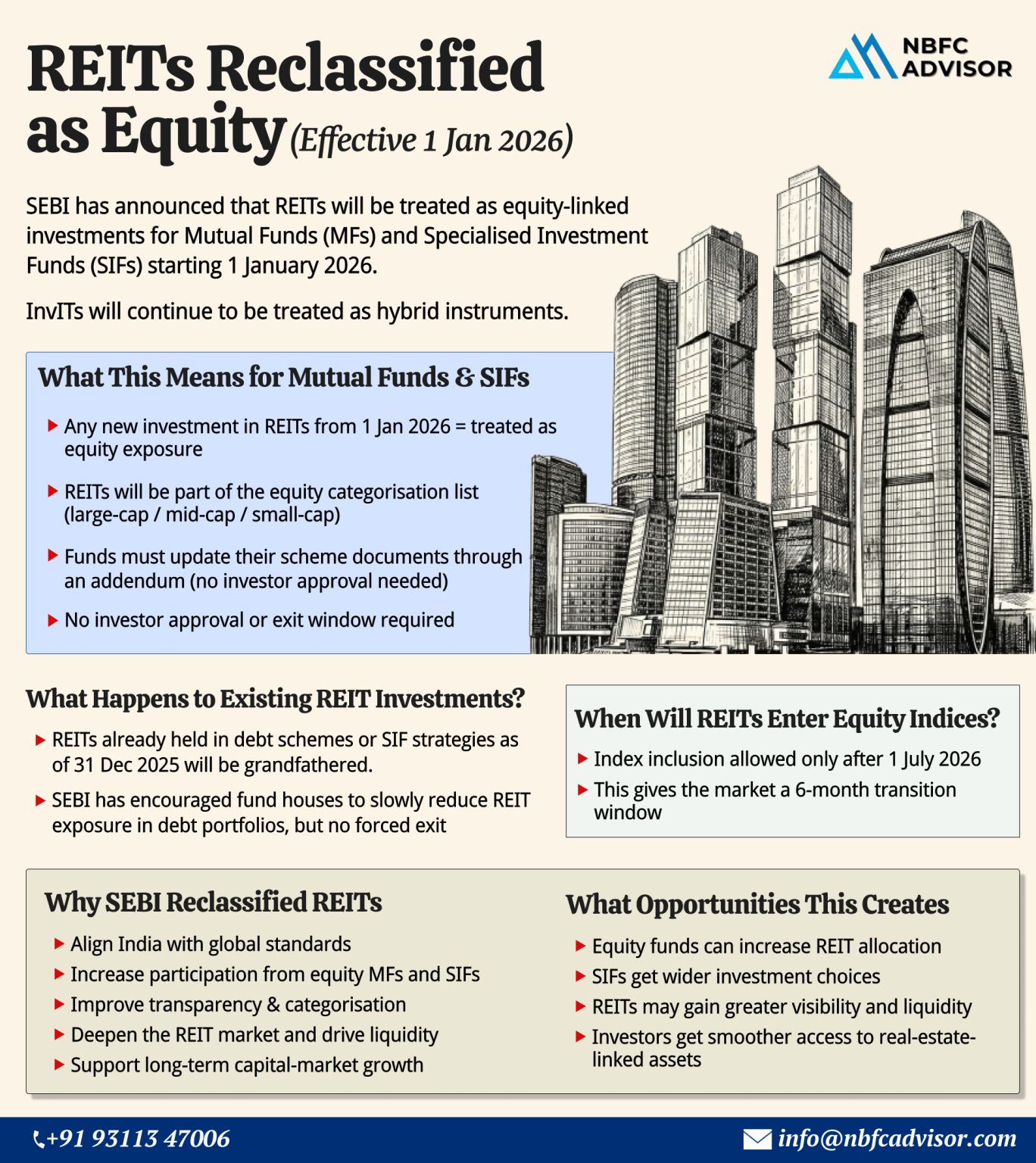
In a major regulatory shift, SEBI has reclassified Real Estate Investment Trusts (REITs) as equity investments for Mutual Funds and Specialised Investment Funds (SIFs).
Effective January 1, 2026, REITs will move from the earlier “hybrid” classification to “equity”, bringing long-awaited clarity to how fund houses and investors treat these instruments.
This change is expected to reshape capital flows into real estate and significantly expand REIT participation across portfolios.
Why This Change Matters
For years, REITs sat in a regulatory grey area—part equity, part debt. This ambiguity limited allocations, discouraged passive flows, and constrained fund mandates.
SEBI’s reclassification removes that uncertainty and places REITs firmly within the equity ecosystem.
What’s Changing from January 1, 2026?
1. Higher Allocation Limits for Equity Funds
With REITs classified as equity:
- Equity mutual funds can now allocate more capital to REITs
- Portfolio construction becomes more flexible
- Real estate exposure no longer eats into hybrid limits
2. Index Inclusion from July 2026
From July 2026, REITs become eligible for index inclusion, opening the door to:
- Passive fund participation
- ETF inflows
- Long-term institutional capital
This could significantly improve liquidity and valuation stability.
3. Expanded Mandates for SIFs
Specialised Investment Funds gain:
- Broader investment flexibility
- Easier inclusion of REITs within equity strategies
- Better risk-adjusted diversification options
4. Institutional Credibility for Real Estate
Equity classification gives REITs:
- Stronger institutional acceptance
- Improved analyst coverage
- Higher visibility among long-term investors
This is a major step toward making listed real estate a core asset class.
Transition Window: 6 Months
SEBI has provided a 6-month transition period for fund houses to realign portfolios, update disclosures, and adjust mandates ahead of the January 2026 deadline.
This phased approach reduces disruption while ensuring compliance.
What This Means for You
If You’re a Fund Manager
- New allocation and diversification opportunities
- Ability to scale REIT exposure within equity strategies
- Enhanced product innovation potential
If You’re an Investor
-
Better access to real estate through mutual funds
-
Improved liquidity via passive and active flows
-
Clearer tax and regulatory treatment
If You’re in the REIT Ecosystem
-
Potential surge in visibility post-July 2026
-
Increased institutional and retail participation
-
Stronger long-term capital inflows
A Clearer, More Stable Framework
This move by SEBI removes long-standing ambiguity and provides a transparent, predictable framework for fund houses, SIFs, and investors alike.
By aligning REITs with equity investments, SEBI has laid the groundwork for making listed real estate a mainstream investment category in India.
Will REITs Go Mainstream Now?
With regulatory clarity, index inclusion, and expanded fund participation on the horizon, REITs may finally achieve the scale and acceptance long anticipated by the market.
The next two years could redefine how Indian investors access real estate.
What do you think—will REITs become a core part of equity portfolios now?
Hashtags
#NBFCAdvisor #SEBI #REITs #MutualFunds #SIF
#Regulations #Finance #RealEstateInvestment