

Enhancing Clarity, Transparency & Flexibility: SEBI’s Strategic Overhaul of Mutual Funds
SEBI, India’s capital markets regulator, has unveiled a progressive set of reforms for the mutual fund industry, aimed at simplifying structur...

Why Ultra-HNIs and Institutions Are Choosing Category III AIFs
For Ultra-High Net-Worth Individuals (Ultra-HNIs), family offices, and institutional investors, traditional investment avenues are no longer enough. In an era of volatile markets and c...

Why Ultra-HNIs and Institutions Are Choosing Category III AIFs
For Ultra-High Net-Worth Individuals (Ultra-HNIs), family offices, and institutional investors, traditional investment avenues are no longer enough. In an era of volatile markets and c...

Struggling to Raise Funds for Your NBFC? Here’s What You Need to Know
Raising funds has become one of the biggest challenges for Non-Banking Financial Companies (NBFCs) today.
High borrowing costs, tighter RBI regulations, and limited acces...
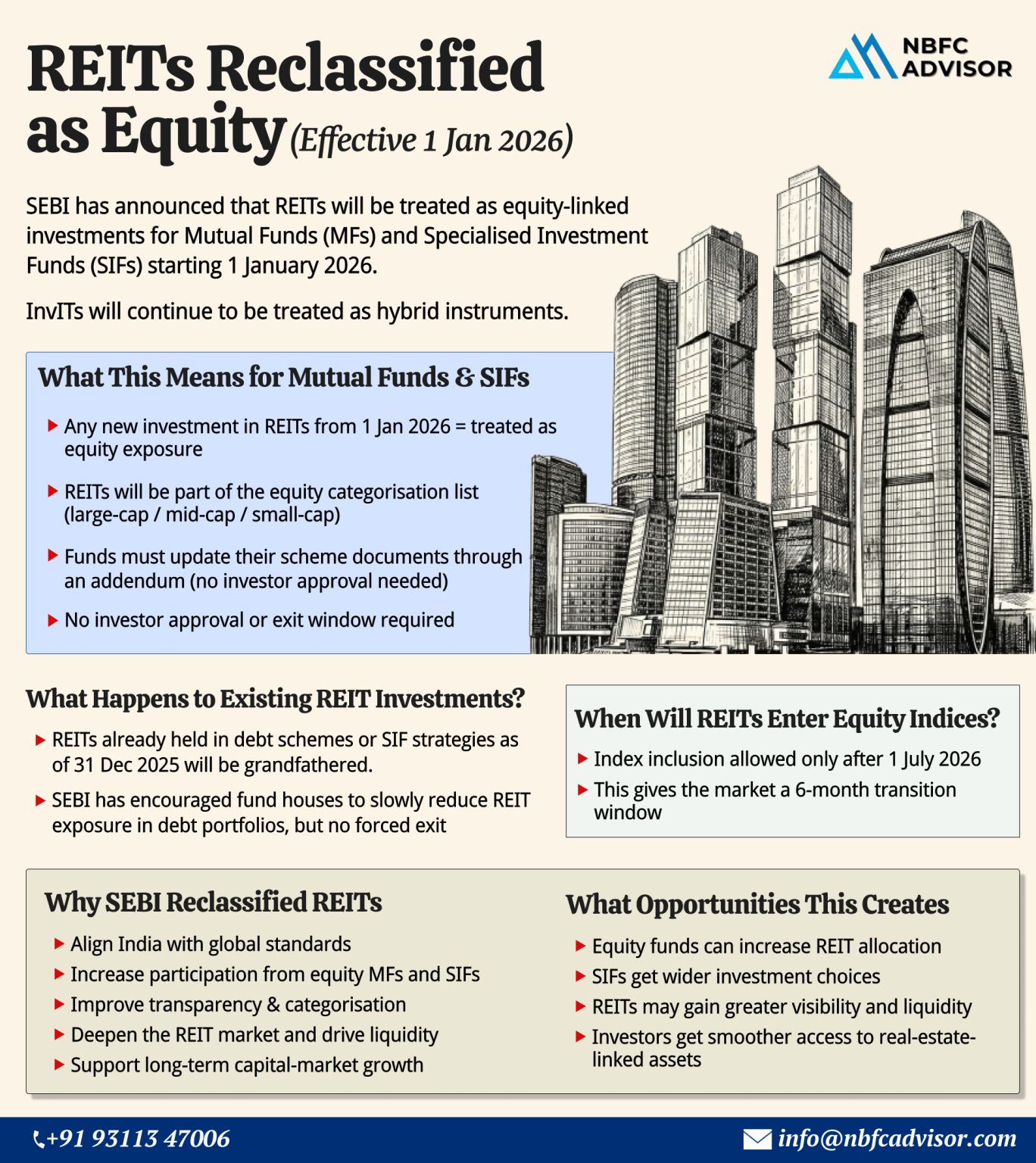
SEBI Reclassifies REITs as Equity Investments: What It Means for Funds and Investors
In a major regulatory shift, SEBI has reclassified Real Estate Investment Trusts (REITs) as equity investments for Mutual Funds and Specialised Investment Funds (...
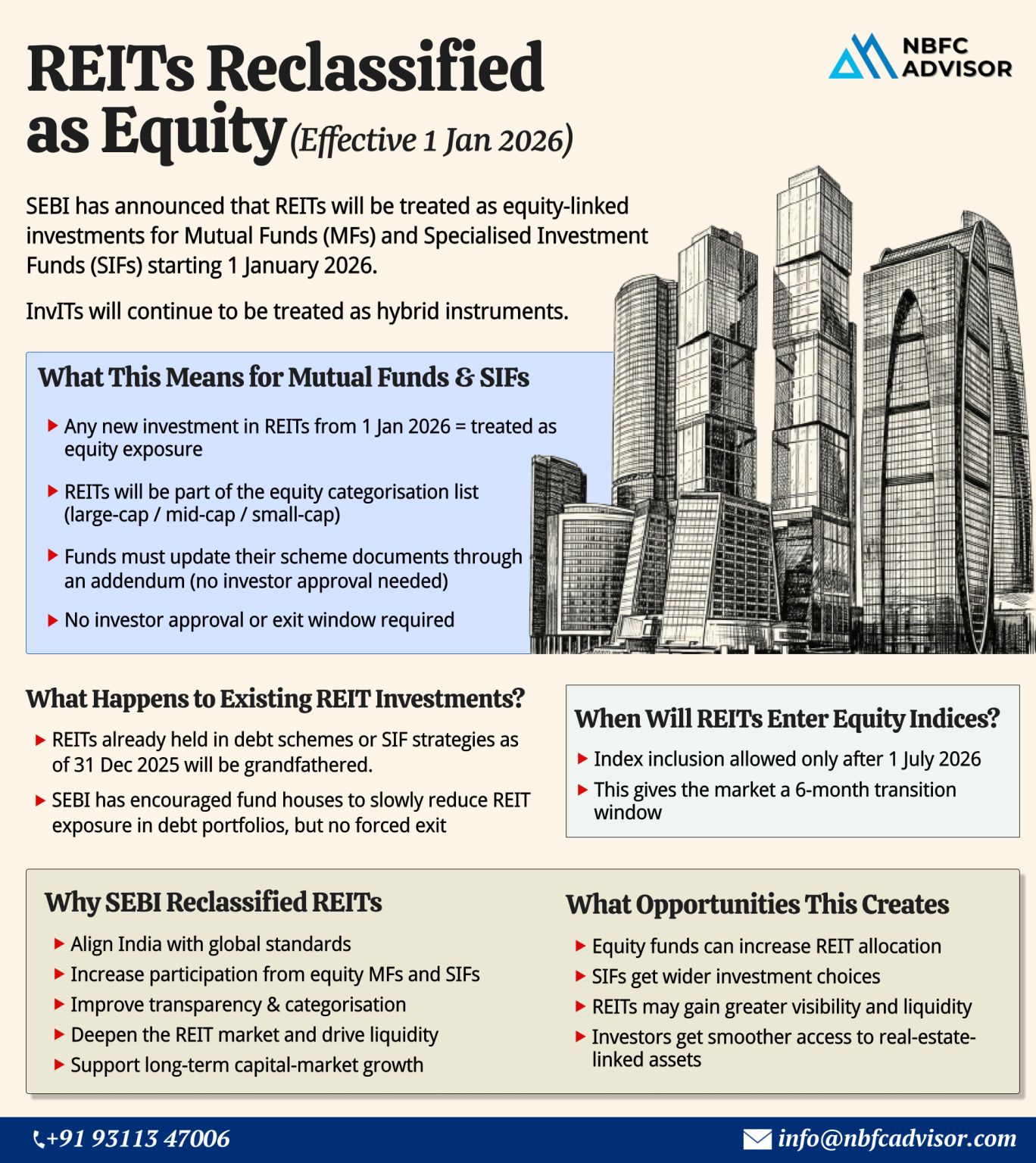
SEBI Just Reclassified REITs as Equity — And It Changes Everything
SEBI has officially reclassified Real Estate Investment Trusts (REITs) as equity investments — a landmark regulatory shift that will reshape how institutions and invest...

Want to Become a SEBI-Registered Stock Broker?
If you’re looking to enter India’s capital markets as a stock broker, obtaining a SEBI registration is a must. This license not only authorizes you to operate legally but also builds trust...

🔍 Enhancing Clarity, Transparency & Flexibility: SEBI’s Strategic Overhaul of Mutual Funds
SEBI, India’s capital markets regulator, has unveiled a progressive set of reforms for the mutual fund industry, aimed at simplifying struc...
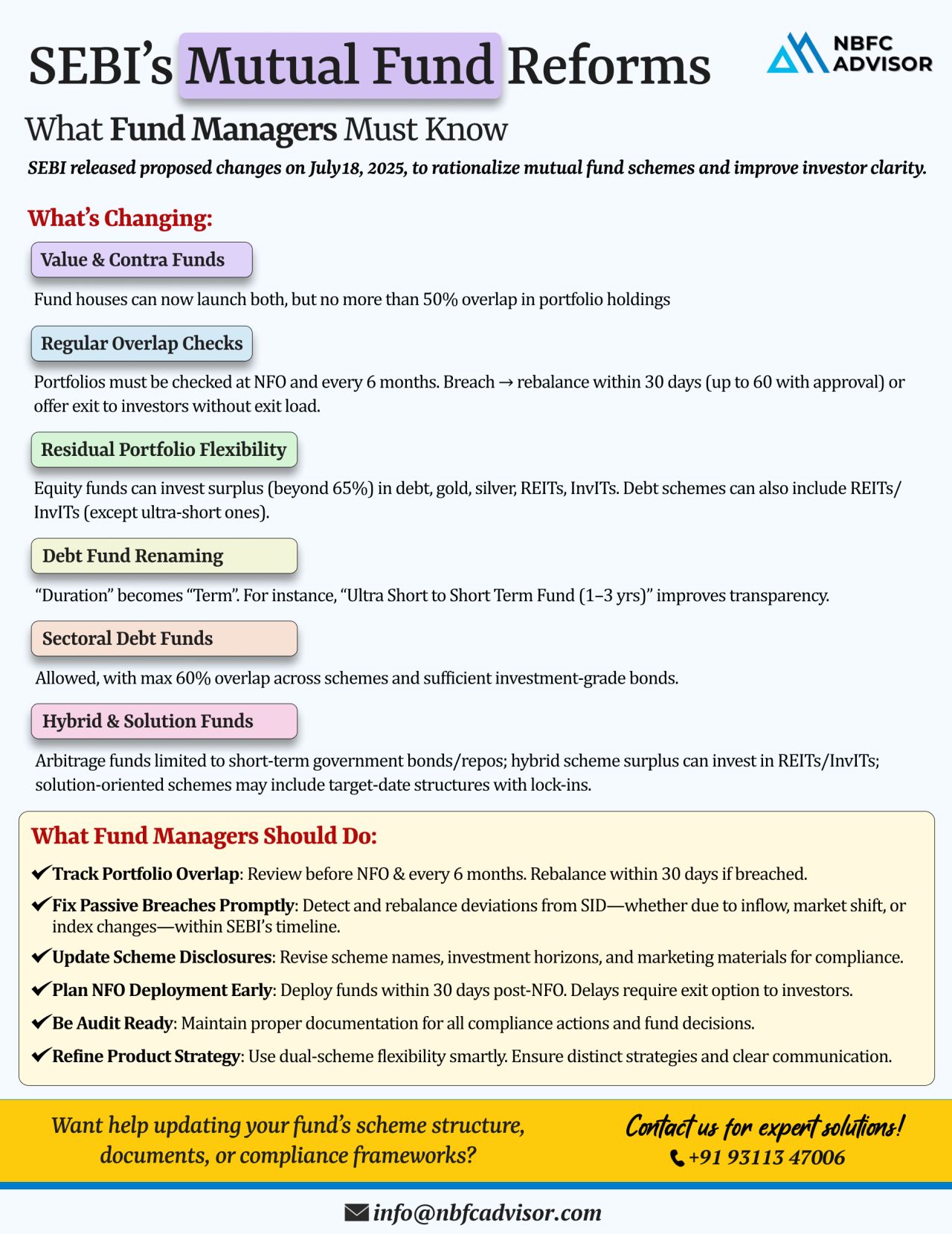
📰 SEBI’s Latest Mutual Fund Reforms: A Step Towards Clarity and Better Risk Management
The Securities and Exchange Board of India (SEBI) has introduced a series of proposed reforms to bring greater transparency, clarity, and structure to mu...