
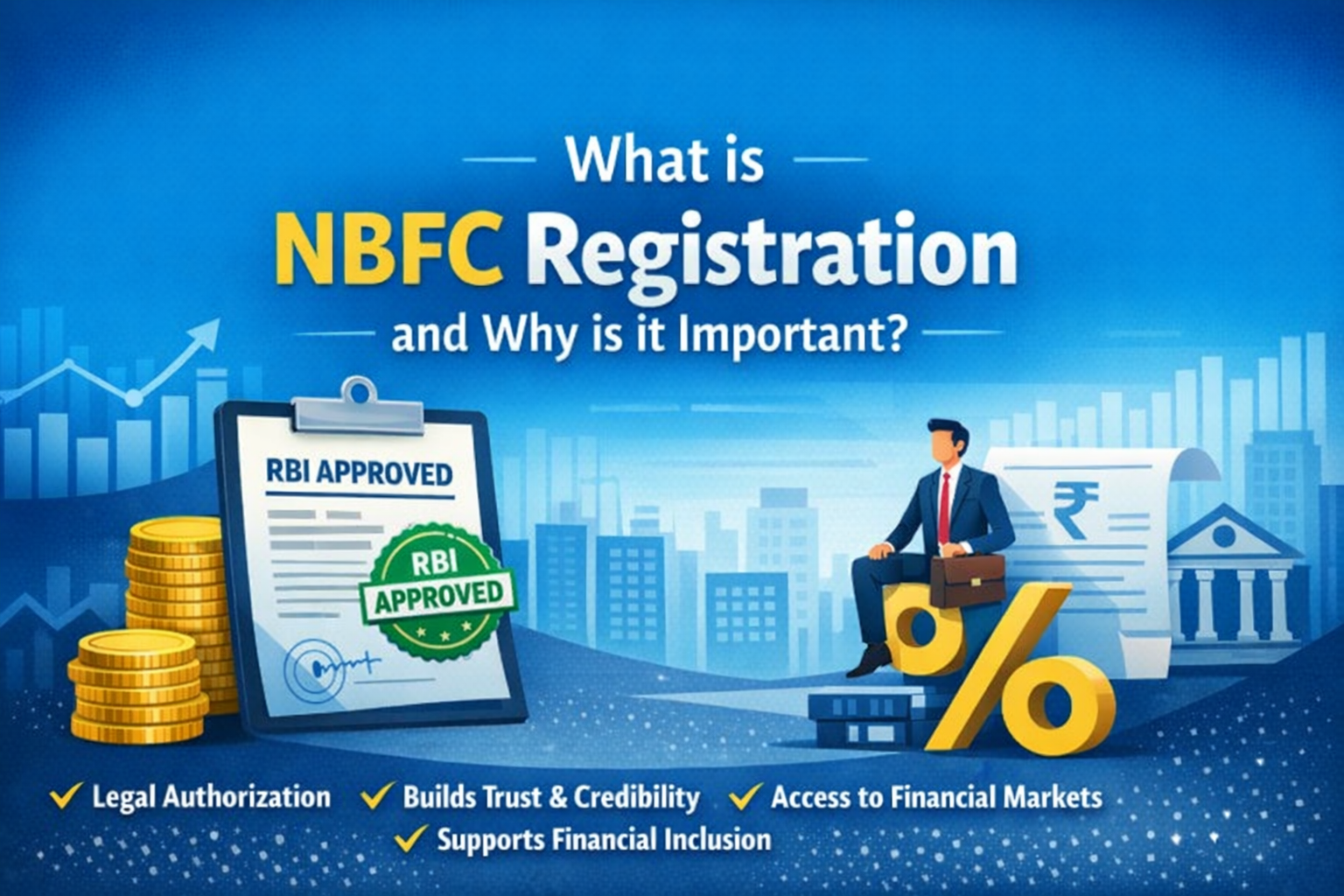
What is NBFC Registration and Why is it Important?
In today’s fast-growing financial sector, businesses are constantly looking for opportunities to provide financial services beyond traditional banking. One such opportunity is through NBFCs, also known as Non-Banking Financial Companies. However, before starting operations, NBFC registration is a mandatory requirement in India.
What is NBFC Registration?
NBFC registration is the process through which a company gets approval from the Reserve Bank of India (RBI) to operate as a Non-Banking Financial Company. NBFCs provide financial services similar to banks, such as loans, asset financing, investment services, and credit facilities, but they do not hold a banking license.
To legally function as an NBFC, a company must be registered under the Companies Act and obtain a Certificate of Registration (CoR) from RBI. Without this approval, no company can carry out NBFC-related activities.
Key Features of NBFCs
- Provide loans and advances
- Invest in shares, bonds, and securities
- Offer asset financing services
- Promote financial inclusion
- Serve individuals and small businesses
Unlike banks, NBFCs cannot accept demand deposits or issue cheques, but they play a crucial role in strengthening the financial system.
Why is NBFC Registration Important?
1. Legal Authorization
NBFC registration gives a company the legal right to operate financial services. Without registration, conducting such activities is illegal and can lead to heavy penalties.
2. Builds Trust and Credibility
Being registered with RBI enhances the company’s credibility. Customers and investors feel more secure dealing with a regulated entity.
3. Access to Financial Markets
Registered NBFCs can access funding from banks, financial institutions, and capital markets, helping them expand their operations.
4. Promotes Business Growth
NBFCs cater to sectors where banks may not reach easily, such as small businesses, rural areas, and startups. This helps in expanding business opportunities.
5. Ensures Regulatory Compliance
NBFC registration ensures that companies follow RBI guidelines, maintain transparency, and operate ethically.
6. Supports Financial Inclusion
NBFCs play a major role in providing financial services to underserved and unbanked populations, contributing to economic development.
Conclusion
NBFC registration is not just a legal requirement but a crucial step toward building a trustworthy and successful financial business. It ensures compliance, boosts credibility, and opens doors to numerous growth opportunities. As India’s financial ecosystem continues to expand, NBFCs are becoming increasingly important in bridging the gap between traditional banking and modern financial needs.